

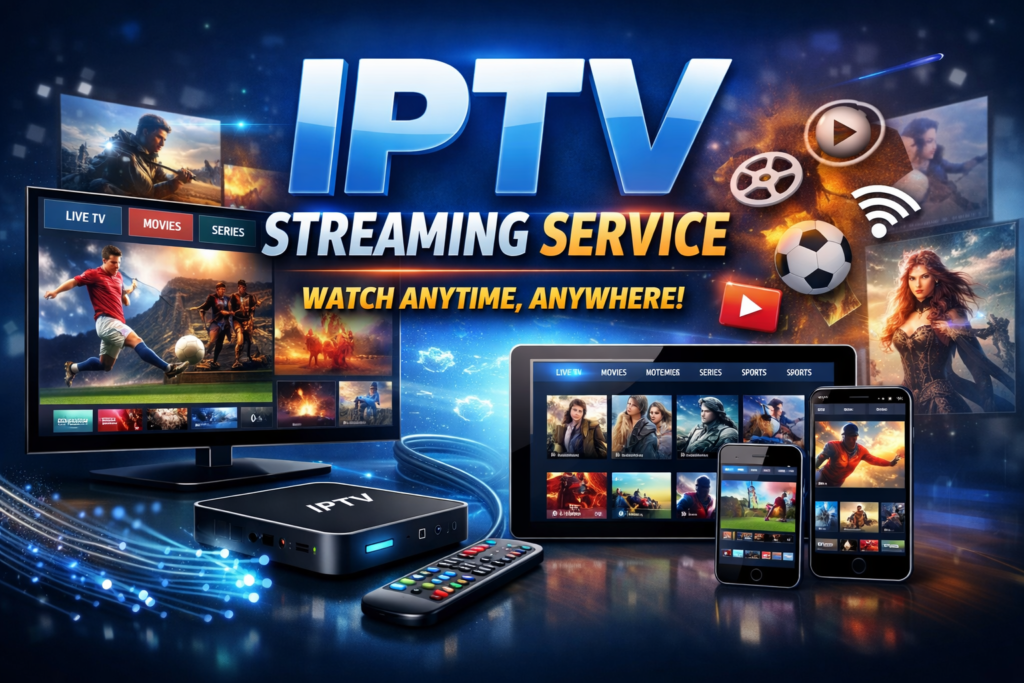
IPTV Streaming Service: The Complete Guid 2026
In recent years, the way people consume television content has changed dramatically. Traditional cable and satellite TV are steadily losing ground to more flexible, internet-based solutions. At the center of this transformation is the IPTV streaming service, a technology that delivers television content over the internet rather than through conventional broadcast methods. This shift is not just a trend—it represents a fundamental change in how entertainment is accessed, personalized, and experienced.
This in-depth article explores what an IPTV streaming service is, how it works, its benefits and challenges, and why it is becoming the preferred choice for millions of viewers worldwide.
What Is an stream IPTV Service?
An IPTV service (Internet Protocol Television) is a digital television delivery system that uses internet protocols to stream live TV channels, on-demand content, and recorded programs directly to users. Unlike traditional cable or satellite TV, IPTV does not rely on fixed broadcast schedules or physical infrastructure like coaxial cables or satellite dishes.
With an Stream IPTV service, content is delivered through broadband or fiber internet connections and can be accessed on multiple devices such as smart TVs, smartphones, tablets, laptops, and dedicated IPTV boxes. This flexibility is one of the main reasons IPTV has gained massive popularity.
How an IPTV Streaming Service Works
To understand the appeal of IPTV, it helps to know how it functions behind the scenes. An IPTV streaming service operates through three main components:
Content Source – Television channels, movies, series, and live events are collected from broadcasters and content providers.
Streaming Servers – The content is encoded, compressed, and stored on high-performance servers that distribute data efficiently.
User Devices – Viewers access the content using apps or software compatible with their devices.
Instead of broadcasting all channels at once (as cable TV does), IPTV sends only the content a user selects. This method, known as unicast streaming, reduces bandwidth waste and allows for better control over viewing quality.
Types of Stream IPTV Services
Not all stream iptv services are the same. They typically fall into three main categories:
1. Live IPTV
Live IPTV allows users to watch TV channels in real time, similar to traditional television. This includes news channels, sports events, and live entertainment programs.
2. Video on Demand (VOD)
VOD services offer a library of movies, TV series, and exclusive content that users can watch at any time. This feature gives viewers complete control over what and when they watch.
3. Time-Shifted TV
Time-shifted IPTV enables users to replay previously aired programs. Features like catch-up TV and cloud-based recording fall under this category.
Many IPTV services combine all three types into a single platform for a complete entertainment experience.
Key Benefits of Using an Stream IPTV Service
The growing demand for Stream IPTV services is driven by several compelling advantages:
Flexibility and Convenience
An Stream IPTV service allows users to watch content anytime, anywhere, as long as they have an internet connection. There is no need to be tied to a TV set or a fixed schedule.
Cost-Effectiveness
Compared to traditional cable subscriptions, IPTV services are often more affordable. Users can choose packages that fit their needs without paying for unnecessary channels.
Multi-Device Compatibility
Modern stream IPTV services support multiple devices, enabling seamless switching between a TV, smartphone, or laptop.
Customizable Content
Users can personalize their experience by selecting preferred channels, languages, and genres. This level of customization is rarely possible with traditional TV.
High-Quality Streaming
With a stable internet connection, IPTV can deliver HD and even 4K content with minimal buffering and superior picture quality.
IPTV Streaming Service vs Traditional TV
When comparing an stream IPTV service to traditional television, the differences are clear:
Delivery Method: IPTV uses the internet, while traditional TV relies on cable or satellite signals.
User Control: IPTV allows on-demand access; traditional TV follows fixed schedules.
Scalability: IPTV services can easily add new channels and features.
Interactivity: IPTV supports interactive features such as pause, rewind, and personalized recommendations.
These advantages explain why many households are switching from cable TV to IPTV streaming services.
Challenges and Limitations of IPTV Streaming Services
Despite its benefits,Stream IPTV is not without challenges:
Internet Dependency
A reliable and fast internet connection is essential. Poor connectivity can result in buffering, lag, or reduced video quality.
Legal and Licensing Issues
Not all IPTV streaming services operate legally. Users must ensure they choose licensed providers to avoid legal risks and service interruptions.
Technical Setup
While many Stream IPTV platforms are user-friendly, initial setup may be confusing for non-technical users.
Security and Privacy Considerations
When using an IPTV service, security should not be overlooked. Reputable providers use encryption and secure servers to protect user data. Viewers should avoid unverified services, use strong passwords, and consider VPNs when accessing content on public networks.
The Role of IPTV in the Future of Entertainment
The future of television is undeniably digital, and IPTV streaming services are at the forefront of this evolution. With advancements in internet speeds, cloud technology, and artificial intelligence, IPTV platforms are becoming smarter and more efficient.
Features such as AI-driven recommendations, interactive advertising, and integration with smart home systems are shaping the next generation of IPTV streaming services. As 5G and fiber-optic networks expand, IPTV will become even more accessible and reliable.
How to Choose the Right IPTV Streaming Service
Selecting the best IPTV service depends on several factors:
Content Variety – Ensure the service offers channels and content that match your interests.
Streaming Quality – Look for HD or 4K support with minimal buffering.
Device Compatibility – Confirm compatibility with your preferred devices.
Customer Support – Reliable support is crucial for troubleshooting.
Legal Compliance – Always choose a licensed and reputable provider.
Taking time to research these factors will help you make an informed decision.
Conclusion
An IPTV service represents a powerful shift in how television content is delivered and consumed. By offering flexibility, affordability, and a highly personalized viewing experience, IPTV has positioned itself as a leading alternative to traditional TV.
As technology continues to advance, IPTV streaming services will only become more sophisticated, secure, and user-friendly. For viewers seeking control, variety, and convenience, IPTV is not just an option—it is the future of entertainment.